Buying guide
Best dog-proof litter box in 2026: 8 picks that actually keep dogs out
By Willa Bergman · Reviews editor · Reviewed by Simon Draper
Last updated
We earn commissions from links on this page, at no cost to you. Our picks stay independent. Prices are indicative and were last checked around publication — they change often, so confirm the current price on the retailer’s site. How we research & rank →
Our picks
Ranked, with the trade-offs
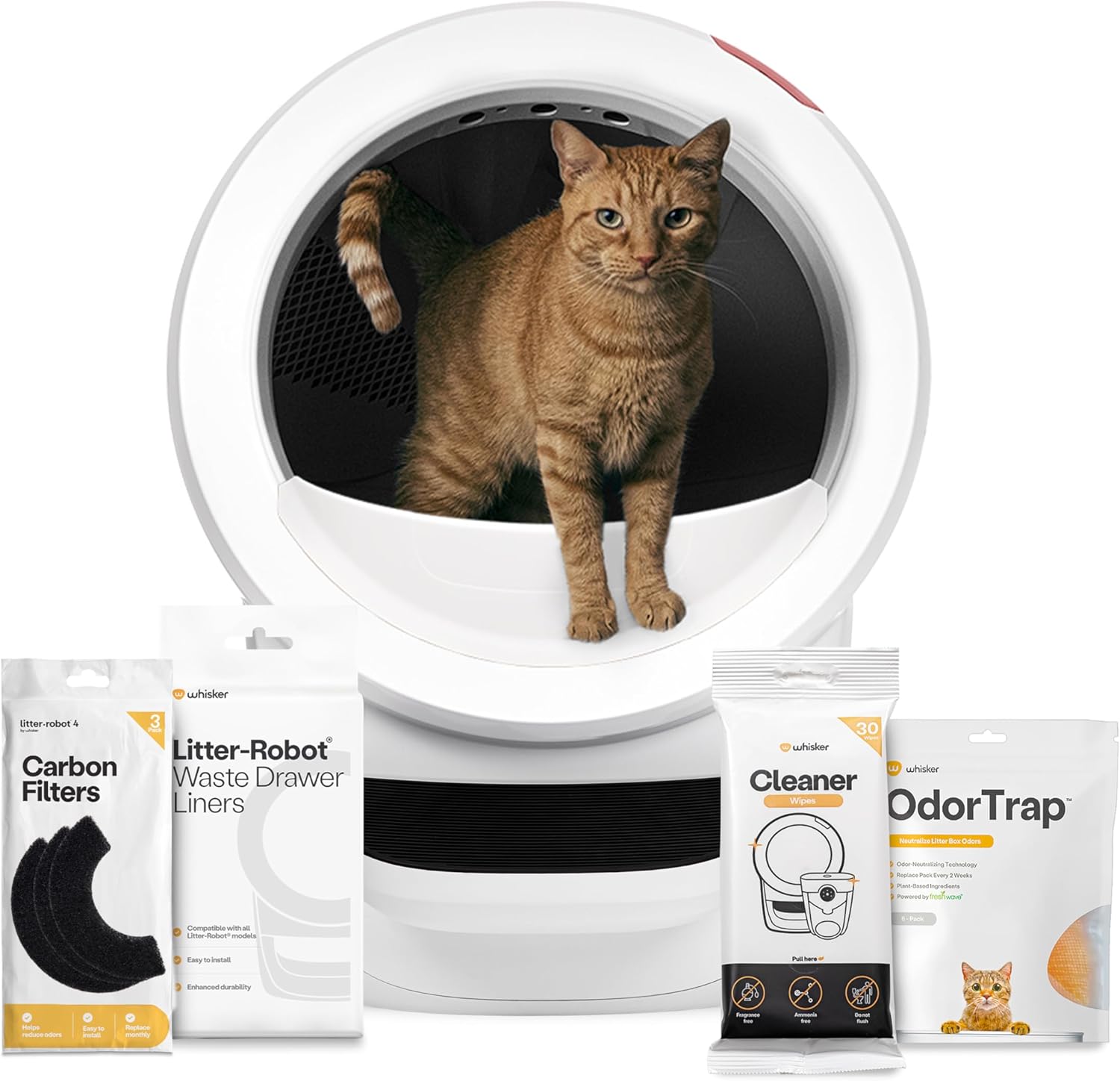
Litter-Robot 4
from
$699
A globe-shaped sifting robot with the largest waste drawer and most advanced sensors in the Whisker lineup.
Pros
- + OmniSense detection combines weight and infrared sensors for reliable cycle triggering
- + Carbon-filtered waste drawer with OdorTrap system delivers strong odor control
- + Tracks cat weight over time and provides detailed usage logs in-app
Cons
- – Large footprint requires significant floor space
- – Only works reliably with clumping litter, ruling out crystal or pellet types

IRIS Round Top Entry
from
$34.99
A top-entry round litter box that uses a small, high lid opening to physically block most dogs while giving cats an easy jump-in access point.
Pros
- + Grooved lid removes litter from paws before cat exits, reducing tracking
- + Rounded shape and lid hook make lifting off for cleaning fairly simple
- + Enclosed design contains spraying and odors better than open pans
Cons
- – Rounded interior corners make scooping into a bag awkward
- – Small kittens, seniors, or low-mobility cats may struggle to jump in and out

PetSafe ScoopFree Crystal Smart
from
$279.99
A rake-based automatic litter box that uses odor-absorbing crystal litter and an optional top-entry cover to keep dogs from reaching waste before it's raked away.
Pros
- + Crystal litter dehydrates waste, reducing the smell that attracts dogs in the first place
- + Compact footprint compared to globe-style automatic boxes
- + App tracks litter box visits for health insights
Cons
- – Only works with proprietary crystal litter, not standard clumping litter
- – 20-minute rake delay leaves a window where a fast dog could get to waste first

Modkat XL Configurable
from
$139
An oversized, dual-configuration litter box that can be set up as a dog-blocking top-entry unit or a gentler front-entry box for large or senior cats.
Pros
- + Swivel lid design avoids wrestling with a bulky hood during scooping
- + Top-entry mode keeps floors largely litter-free thanks to the walk-off mat lid
- + Reusable liner cuts down on ongoing plastic liner costs
Cons
- – Premium design comes at a steeper cost than basic plastic top-entry boxes
- – Some cats need an adjustment period to accept the top-entry configuration
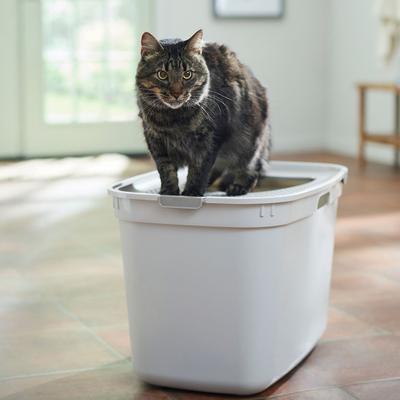
Frisco Top Entry XL
from
$27.98
A recycled-plastic top-entry box with a textured lid that flips up for scooping, giving a dog-blocking entry point at an accessible cost.
Pros
- + Flip-up lid lets accumulated litter slide back into the box automatically
- + Larger interior than many competing top-entry boxes in its class
- + Enclosed sides contain spraying from cats who pee while standing
Cons
- – Lid can feel flimsy and may sag or wobble under heavier cats over time
- – Lightweight overall construction can tip more easily than heavier boxes
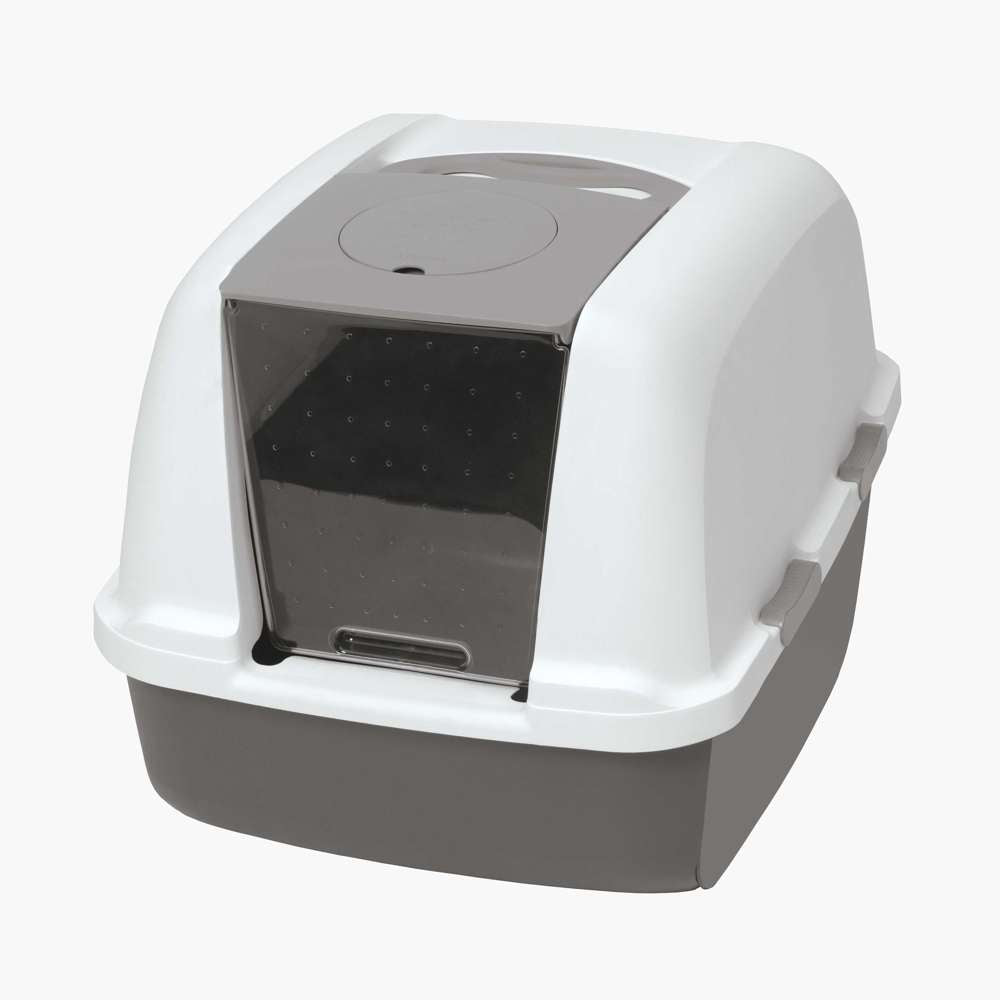
Catit Jumbo Hooded Pan
from
$44.99
A roomy hooded litter pan with a removable front door and carbon filter, sized for large cats while keeping most dogs from squeezing through the doorway.
Pros
- + Large hood and floor space comfortably fit bigger cat breeds
- + Front door can be removed or left on depending on cat and dog-proofing needs
- + Raised back panel helps contain high-standing urination
Cons
- – Side latches connecting hood to base are frequently reported as difficult to seat properly
- – Door opening is wide enough that small dogs may still be able to poke through
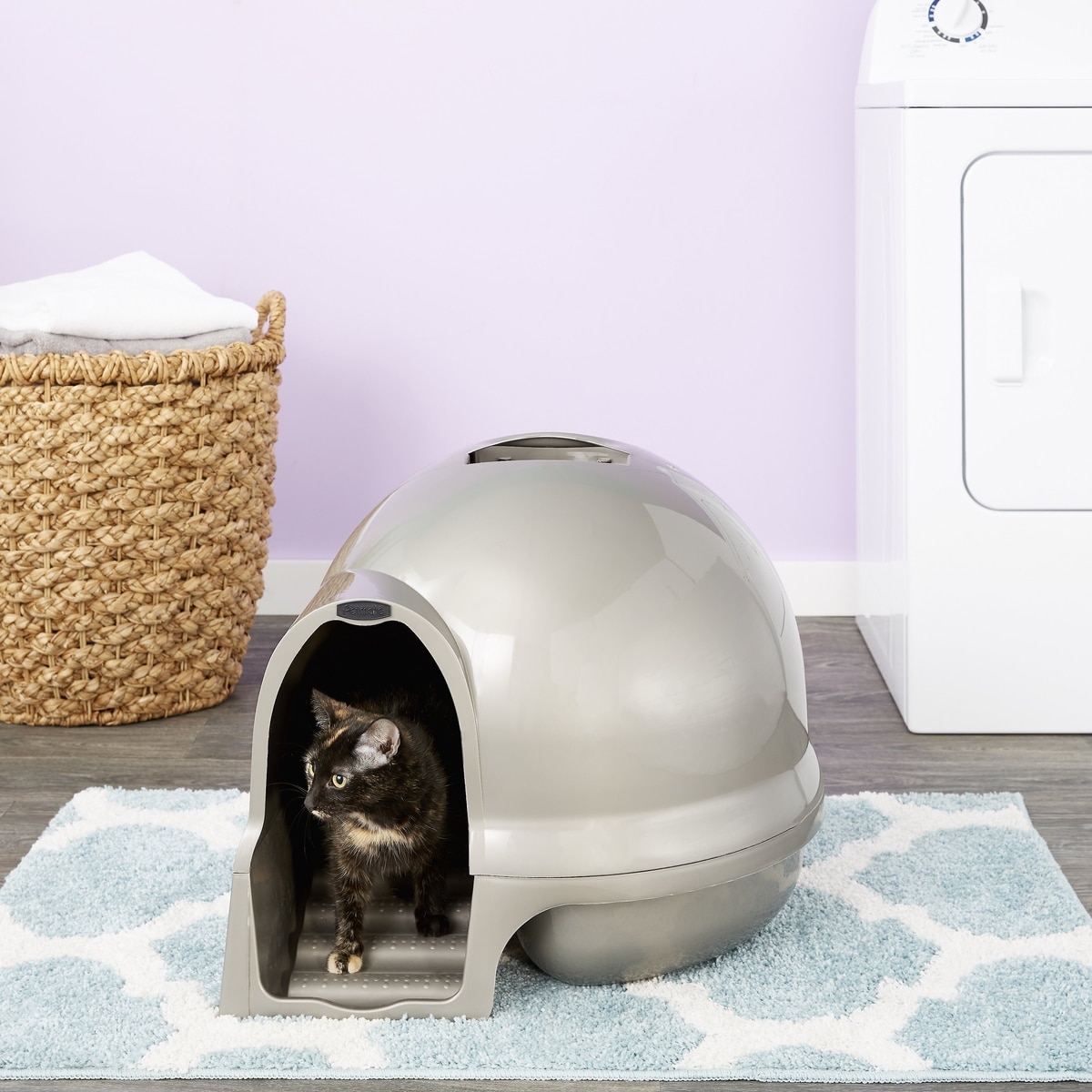
Petmate Booda Clean Step
from
$39.99
An igloo-shaped hooded litter dome with a stepped entry ramp that knocks litter off paws while its narrow front opening deters larger dogs.
Pros
- + Step design captures loose litter from paws before the cat exits
- + Large charcoal filter noticeably cuts down on ambient odor
- + Enclosed dome shape adds a real physical barrier for smaller dogs
Cons
- – Half-moon interior shape is smaller than it looks from outside, tight for big cats
- – Front opening is large enough that persistent, small-to-medium dogs may get through
Clevercat Top Entry
A minimalist top-entry litter box with a treaded lid designed to trap litter and keep spraying, kicking, and dogs contained inside a sealed unit.
Pros
- + Effective at containing kicked litter and high-spray urination inside the box
- + Simple one-piece design with fewer failure-prone parts like doors or latches
- + Sealed body helps keep odor from spreading into the room
Cons
- – Too small for medium-to-large cats to comfortably turn around in
- – Treaded lid pattern can trap debris and become tricky to clean thoroughly
The verdict
Our top picks at a glance
Multi-cat households wanting the most trusted, feature-rich automatic litter box
Owners with small to medium dogs and agile cats who want a simple, non-electronic option
Owners who want automatic waste removal without a large globe-style unit
Large-cat or multi-cat homes that want flexibility between top-entry security and easier front access
At a glance
How they compare
| Spec | Top pickLitter-Robot 4 | IRIS Round Top Entry | PetSafe ScoopFree Crystal Smart |
|---|---|---|---|
| Price | $699 | $34.99 | $279.99 |
| Connectivity | Wi-Fi + Whisker app | — | My PetSafe app for health/usage monitoring |
| Check price → | Check price → | Check price → |
Top 3 of 8 shown — full shortlist above.
The short answer
The IRIS USA Round Top Entry Cat Litter Box is the best all-around dog-proof pick for most households: a small, high lid opening blocks the average dog’s snout and head while staying simple, affordable, and easy for most cats to use. If you have multiple cats and want automation on top of dog-proofing, the Litter-Robot 4 is the more capable (and pricier) upgrade. If your dog is small and persistent, or your cat is large or elderly, keep reading—the right box really does depend on the dog and cat you’re managing, not just the word “dog-proof” on the box.
That word deserves some skepticism up front. As dog-proofing guides from Lofty Loo and Perfect Litter Box both point out, no litter box design guarantees 100% prevention. What actually works is physical access control: a genuinely small or high opening, a door your dog can’t push through, or a lid your dog can’t lift. Marketing language alone doesn’t stop a determined 15-pound terrier—structure does.
How dog-proof litter boxes actually work
There are basically three strategies on the market, and they’re not equally effective for every dog.
- Top-entry boxes force the cat to jump up and drop in through a hole in the lid. This works well against larger and mid-size dogs because vertical entry is awkward for them, but small, food-motivated dogs who are persistent enough to try can be a problem, and it’s genuinely hard on elderly, obese, or arthritic cats. Vet-facing sources recommend an entry height of roughly 3 to 5 inches for senior cats, and a box that requires a big jump doesn’t meet that.
- Hooded boxes with a front door rely on a narrow opening rather than height. These are more accessible for cats with mobility issues, but the opening has to be genuinely narrow, because a wide doorway just invites a small-to-medium dog to squeeze through.
- Automatic boxes dog-proof indirectly, by raking or sifting waste away quickly so there’s less to find, or by using crystal litter that dehydrates waste and cuts the odor that attracts dogs in the first place.
Whichever route you pick, don’t skip environmental management. A baby gate, a cracked door, or a litter box tucked into a closet a dog can’t access is often more reliable than any box design alone, according to Perfect Litter Box and PetMD. Training a dog to leave the litter box alone rarely works on its own, because dogs are wired by scent and habit—the Merck Veterinary Manual notes coprophagia is a normal, scavenger-rooted behavior—so blocking access removes the reward and makes any training you do far more effective.
IRIS USA Round Top Entry Cat Litter Box — best overall
This is the simplest, most affordable route to real dog-proofing. The lid has a small, high entry opening that most dogs can’t fit their head into, and the grooved, textured underside knocks litter off your cat’s paws before they climb out, which cuts down tracking. It’s made of BPA-free plastic in the USA, comes with a scoop that hooks onto the unit for storage, and works with any litter type.
The trade-off is shape: the rounded interior corners make it awkward to scoop waste directly into a bag, so you’ll be working around curves more than with a square pan. It’s also a genuine jump for small kittens, senior cats, or anything with mobility issues. For a healthy adult cat and a small-to-medium dog, though, it’s hard to beat for the price.
Best for: owners with small to medium dogs and agile cats who want a simple, non-electronic option.
Litter-Robot 4 — best for multi-cat, tech-forward homes
This is the most advanced automatic box in the roundup and dog-proofs by combining a sealed globe shape with fast, sensor-triggered waste removal. Whisker’s OmniSense system layers weight and infrared sensors to trigger sifting cycles reliably, the carbon-filtered waste drawer (holding 9 to 10 lbs of sifted litter) uses an OdorTrap system to keep smell contained, and the app logs each cat’s weight and usage over time, rated for up to 4 cats with a 5 lb minimum cat weight.
The catches: it’s a big unit, so it needs real floor space, and it only works reliably with clumping litter, which rules out crystal or pellet fans. It’s also the most expensive box here by a wide margin. Automatic boxes aren’t universally the right call, either. Research on automated litter monitoring notes that machinery noise during the cleaning cycle can startle some cats, so a nervous cat may need a slow introduction, or may avoid it altogether.
Best for: multi-cat households wanting the most trusted, feature-rich automatic litter box.
PetSafe ScoopFree Crystal Smart — best for automatic without the bulk
ScoopFree takes a different tack: rather than a big sealed dome, it’s a compact rake-based unit that uses disposable crystal litter trays. Crystal litter dehydrates waste, which directly reduces the odor that draws a dog over in the first place, and PetSafe claims 5x better odor control than traditional litter. An optional top-entry cover (compatible with 2nd Gen and Smart models) adds a physical barrier on top of that. The My PetSafe app tracks visits for health insights, and the automatic rake cycle kicks in about 20 minutes after your cat leaves.
That 20-minute delay is the real weak point for dog-proofing specifically: a fast, motivated dog has a window to get to waste before the rake clears it, so this works best paired with the top-entry cover or some separation from the dog. It’s also locked into proprietary crystal litter, so if your cat is used to clumping clay, expect an adjustment period.
Best for: owners who want automatic waste removal without a large globe-style unit.
Modkat XL — best for flexibility and large cats
The Modkat XL is the only box here that lets you switch between top-entry (dog-proof) and front-entry (easier access) using the same base, via a 3-position swivel lid that avoids fully removing a hood to scoop. It’s built oversized at 21 x 16.3 x 17 inches, with a full-height, leak-proof seamless base that matters if you have a cat who sprays. The reusable tarpaulin liner lasts up to 3 months, which cuts down on the ongoing cost of disposable liners.
It’s the priciest non-automatic box in this lineup, and some cats need a genuine adjustment period before they’ll accept jumping in through the top opening rather than walking in. But given AAHA-AAFP guidance that a litter box should be at least 1.5 times a cat’s body length (nose to tail base), and most commercial boxes fall short of that at around 16x10 inches, the Modkat XL’s size is a real advantage for big cats or multi-cat homes where undersized boxes are a documented driver of litter box avoidance.
Best for: large-cat or multi-cat homes that want flexibility between top-entry security and easier front access.
Frisco Top Entry, Extra Large — best budget pick
At the low end of the price range, the Frisco Extra Large still delivers a legitimate dog-blocking entry point: an 8.7 x 9.7 inch top opening, a flip-up lid that lets accumulated litter slide back into the box during scooping (no full hood removal needed), and an interior sized larger than many top-entry competitors at 18.5 x 10.5 x 14.5 inches. It’s made from BPA-free recyclable plastic in the USA and rated to support cats up to 33 lbs.
The compromise for that price is build quality. Owners report the lid can feel flimsy and may sag under heavier cats over time, and the lightweight overall construction makes it more prone to tipping than heavier boxes. It’s a solid choice if your dog is medium-sized or smaller and your cat isn’t especially large, but it’s not the box for a determined big dog leaning on it.
Best for: budget-focused households wanting a simple, sizeable top-entry barrier.
Catit AirSift Jumbo Hooded Pan — best for large cats needing a door option
Instead of top-entry, the AirSift Jumbo dog-proofs through a removable, paw-safe swinging front door, sized into a genuinely large pan (22.4 x 19.7 x 18.3 inches) with a raised rear wall and overlapping seams to catch high-standing urination. A carbon-impregnated filter on the hood helps with odor. Because the door is removable, you can dog-proof when needed and open it up for easier access for an older or larger cat when you don’t.
The honest weak points: owners frequently report the side latches connecting hood to base are fiddly to seat properly, and the 10.4 x 9.6 inch door opening, while narrower than an open doorway, is wide enough that small dogs may still squeeze or push through. This one’s best paired with a dog that’s medium-sized or larger.
Best for: owners of large cats or multiple cats who want a spacious hooded box with adjustable privacy.
Petmate Booda Dome Clean Step — best for cats who like an enclosed hideaway
The Booda Dome takes the igloo approach: a stepped entry ramp knocks litter off paws on the way out, a large built-in charcoal filter cuts ambient odor, and the interior runs roughly 50% larger than a standard box. It’s built from 95% recycled materials in the USA and comes in a few finish options if you care about how it looks in your space.
Two real caveats. The half-moon interior shape is smaller than the dome’s exterior suggests, so it can feel tight for a genuinely big cat despite the extra headline capacity. And the front opening, while narrower than an open pan, is large enough that a persistent small-to-medium dog may still get through. Covered boxes in general also carry a documented trade-off: a 2013 study by Grigg, Pick, and Buffington in the Journal of Veterinary Behavior found 70% of cats showed no preference between covered and uncovered boxes when both were clean, but enclosed designs can trap humidity and odor inside, which some individual cats find off-putting or even stressful, per Fear Free’s veterinary behavior resources.
Best for: cats who like a cozy, enclosed hideaway and owners wanting a mid-size dog deterrent.
Clevercat Top Entry — best for spraying or kicking cats
This is the most minimalist box here: a one-piece molded shell with a single top opening and a ridged tread pattern on the lid to strip litter from paws. Because it’s fully sealed with no doors or latches, it’s also one of the best options for containing kicked litter and high-spray urination inside the unit rather than on your floor or walls.
It’s explicitly sized for small to medium cats; a bigger cat won’t be able to comfortably turn around inside. The ridged lid texture, while effective at grabbing litter, can also trap debris and get genuinely tricky to clean out thoroughly over time. As with any top-entry design, it also depends on your cat’s mobility: fine for a healthy adult, not ideal for a senior or overweight cat that struggles to jump.
Best for: owners with small-to-medium cats who spray or kick litter and want strong odor containment.
Best cat litter for odor control
The litter that controls odor best isn’t just about scent additives—it’s about how well it isolates ammonia and moisture from waste. Clumping clay litters with activated carbon or baking soda additives tend to perform well because they seal moisture into a tight clump you can remove immediately. Crystal litters (like what PetSafe’s ScoopFree uses) work by actively dehydrating waste, which slows bacterial odor production at the source rather than just masking it. Whatever litter you choose, daily scooping matters more than any additive since fresh waste is what attracts both odor complaints and curious dogs.
Do self-cleaning litter boxes actually work?
Yes, for most cats, but not universally, and the evidence is more nuanced than marketing suggests. Automatic boxes that reliably detect a cat’s exit and run a sifting or raking cycle can meaningfully cut odor and daily scooping labor, and sensor-driven designs like the Litter-Robot 4’s OmniSense are built specifically to avoid false triggers. But research on intelligent litter box monitoring notes that the mechanical noise of a cleaning cycle can startle some cats, and effectiveness really does depend on design quality rather than the
Keep reading
- Keep dogs out of litter box
- Automatic litter box
- Baxton Studio Elie 2-Door Cat review
- Meowant self-cleaning cat litter box
- Litter robot 4 self cleaning cat litter box
- Metal vs plastic litter box
- Merry Products Cat Litter Loo review
- Baxton Studio Elie 2-Door Cat vs Merry Products Cat Litter Loo
Sources
- Best Dog Proof Cat Litter Box Guide for Multi-Pet Homes
- Dog Proof Cat Litter Box That Actually Keeps Dogs Out | LoftyLoo®
- 10 Best Dog-Proof Cat Litter Boxes in 2026 — Reviews & Top Picks - Catster
- 7 Dog-Proof Cat Litter Boxes That Actually Work - Cats Chef
- Dog Proof Litter Box Solutions That Actually Work (By Dog & Cat Type) - Perfect Litter Box
- The 8 Best Dog-Proof Cat Litter Boxes - Cats.com
- 9 Best Dog-Proof Litter Box For Cats in 2025
- How to Dog-Proof a Litter Box & Train To Stay Away
- Lessons from the Cat: Litter Box Basics for the Veterinary Team - Fear Free
- Is an Automatic Litter Box Safe for Cats? Vet-Approved Analysis
- Enhancing cat care: Unveiling the technology of intelligent litter box monitoring - ScienceDirect
- The Wrong End of the Cat - Why You May be Misunderstanding Litter Box Behavior - Vet in Austin | Star of Texas Veterinary Hospital
FAQ
Frequently asked questions
- Can I DIY a self-cleaning or dog-proof litter box?
- You can retrofit dog-proofing cheaply, using a storage tote with a cut entry hole, a baby gate, or a cracked door a dog can't push through, and these approaches show up often in owner communities as effective budget fixes. A true self-cleaning DIY build is much harder to pull off reliably, since it requires sensors and a sifting mechanism, so most people are better off buying a purpose-built automatic box like the ScoopFree or Litter-Robot rather than engineering one from scratch.
- What do Reddit and owner reviews say about self-cleaning litter boxes in general?
- Owner discussion tends to split by cat temperament: many report their cats adjusted within days and now refuse to use a manual box again, while a smaller group describes cats spooked by the noise or motion of the cleaning cycle, especially skittish or older cats. The consensus that shows up repeatedly is to keep a backup manual box available during the transition period rather than removing the old box immediately.
- Why does my cat litter have an oily-looking stain or residue?
- An oily film on litter or the box itself usually comes from natural skin oils and sebum on your cat's paws and fur transferring during digging, combined with ammonia byproducts from urine breaking down over time. It's more noticeable in plastic pans that have gotten old or scratched, since oils and bacteria work into the micro-scratches; a deep wash with mild soap (not harsh chemicals) and periodically replacing an aging plastic box usually resolves it.
- Are top-entry litter boxes bad for older cats?
- They can be, if the jump height is too high. Veterinary sources recommend an entry height of roughly 3 to 5 inches for senior cats, and most top-entry lids sit well above that, so an arthritic or obese cat may avoid the box entirely rather than struggle to jump in. If you have a senior cat and a dog problem, a hooded box with a narrow front door, like the Catit AirSift, or a switchable design like the Modkat XL, is usually the safer choice.
- Will a dog-proof litter box stop my dog from eating cat litter or waste completely?
- Not with certainty. No design guarantees 100% prevention, since a persistent or small enough dog can still find a way, so a good box should be paired with environmental separation like a gate or closed door. It's also worth the effort: the AKC notes intestinal blockages from clumping litter are rare but possible, and cat feces can carry parasites and bacteria like E. coli or Salmonella that pose real infection risk to dogs.