Buying guide
Best self-cleaning litter box for large cats (2026 guide)
By Willa Bergman · Reviews editor · Reviewed by Simon Draper
Last updated
We earn commissions from links on this page, at no cost to you. Our picks stay independent. Prices are indicative and were last checked around publication — they change often, so confirm the current price on the retailer’s site. How we research & rank →
Our picks
Ranked, with the trade-offs

Whisker Litter-Robot 4
from
$699
A globe-style self-cleaning litter box built to serve up to four cats from one unit.
Pros
- + Wide opening and spacious globe interior suit cats of many sizes
- + Tracks individual cat weight and visit habits in-app
- + Sealed, carbon-filtered waste drawer meaningfully cuts odor
Cons
- – Drawer full-sensor can misread and pause cycling until recalibrated
- – Large footprint requires a dedicated floor space
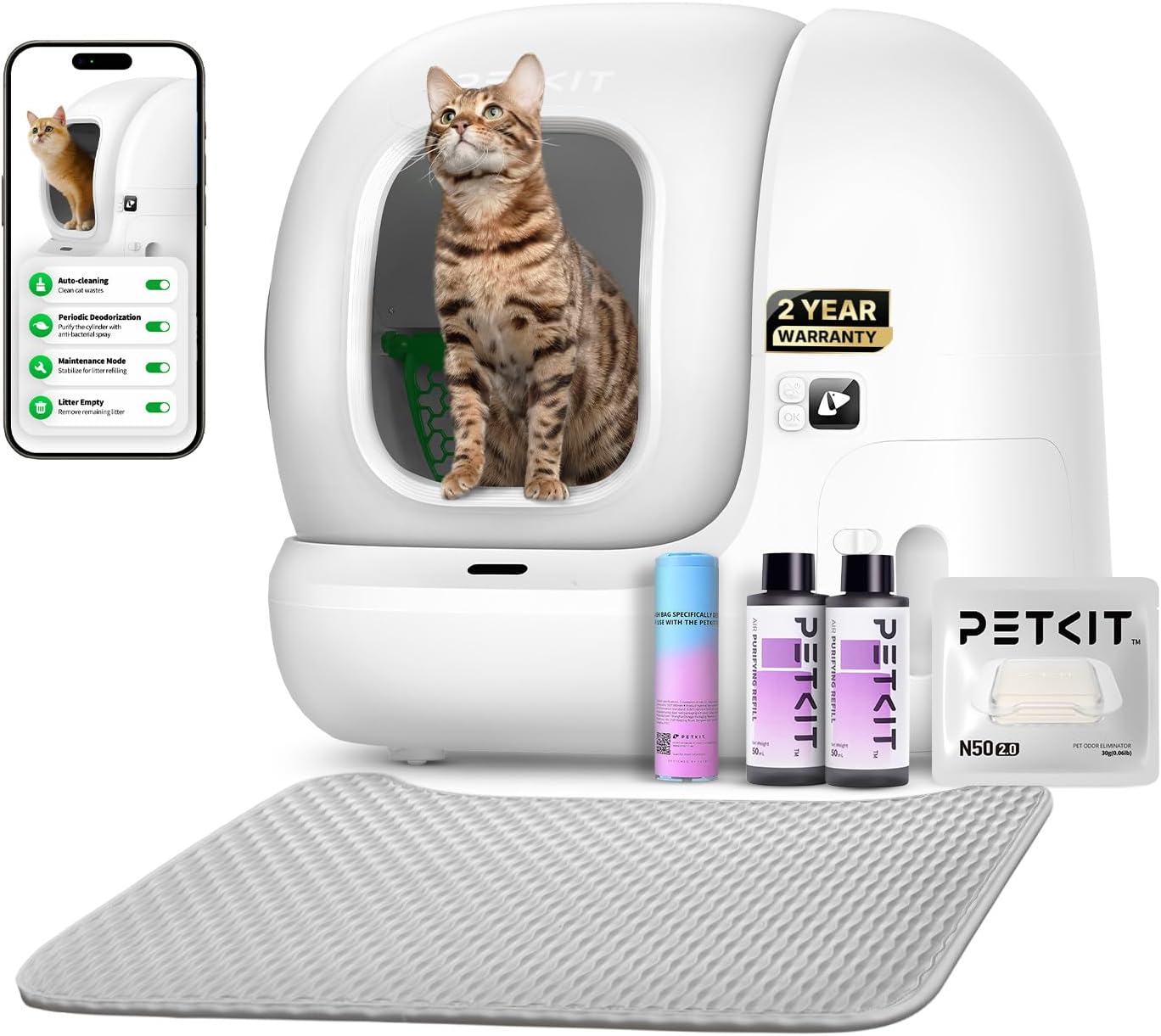
PETKIT PuraMax 2
from
$329
A low-entry, sealed-cylinder self-cleaning box with triple odor control built for multi-cat homes.
Pros
- + Sealed 360° cylinder base resists leaks even from elevated urination
- + Low entry threshold suits smaller or older cats
- + App logs individual cat visits and flags unusual behavior
Cons
- – Not compatible with crystal litter
- – Some owners report a learning curve during initial setup
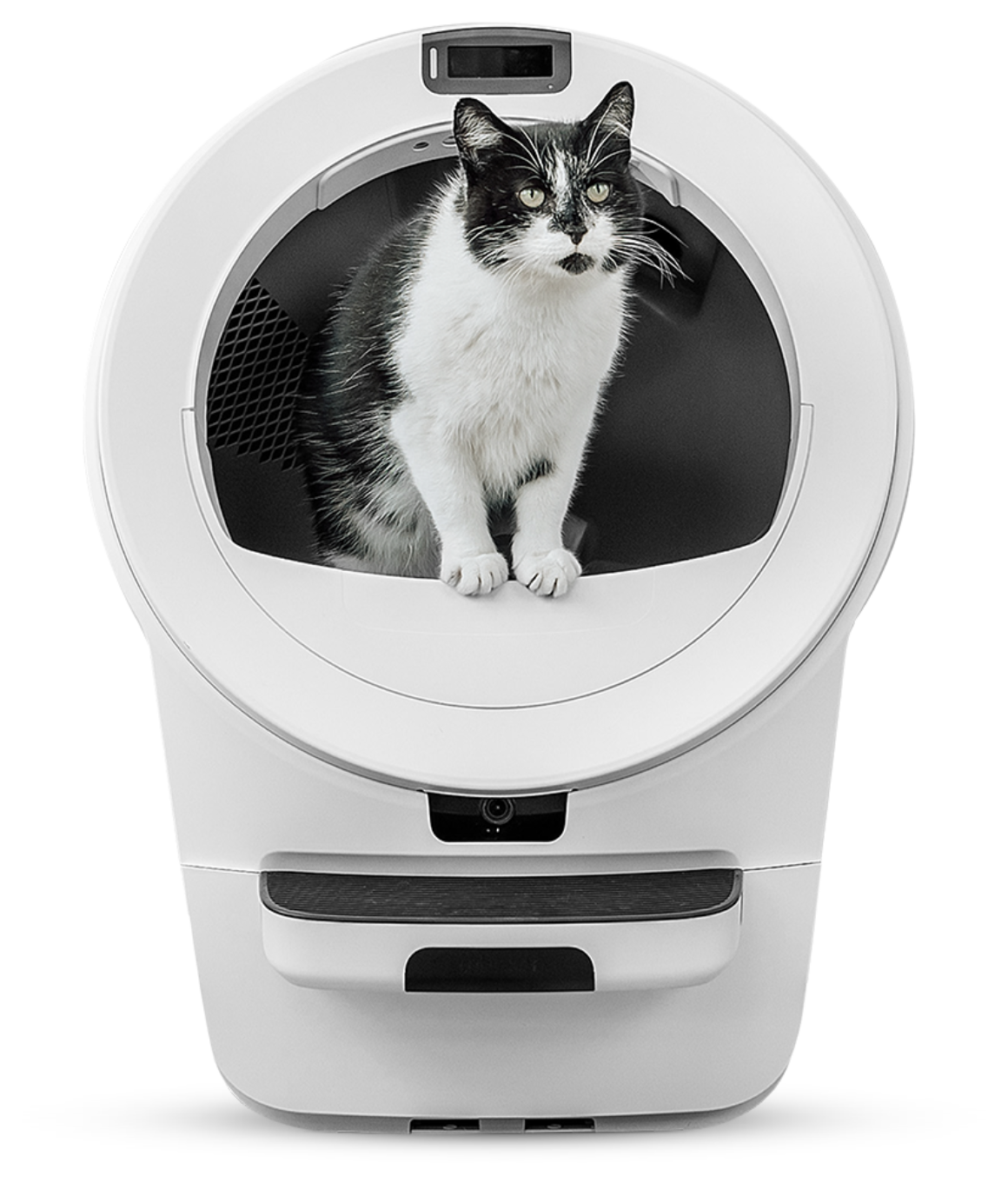
Whisker Litter-Robot 5 Pro
Whisker's flagship globe robot with dual cameras, AI cat recognition, and waste-type detection for large multi-cat homes.
Pros
- + Dual cameras enable real-time streaming and AI facial recognition per cat
- + WasteID technology tailors cleaning cycles to waste type for better odor control
- + Scratch-resistant globe liner improves durability for clawing cats
Cons
- – AI facial recognition requires a paid Whisker+ membership
- – Premium feature set adds bulk and complexity versus simpler robots

PETKIT Purobot Max Pro 2
from
$599
An AI camera-equipped litter box with facial recognition and a larger entry designed for big and multi-cat households.
Pros
- + Larger entry and low threshold designed specifically for big cats
- + Multi-cat facial recognition tracks each cat's individual habits
- + AI health ecosystem flags urinary or behavioral concerns early
Cons
- – Best performance requires PETKIT-branded waste bags
- – Advanced AI camera features add complexity for less tech-focused owners
The verdict
Our top picks at a glance
Multi-cat households wanting a proven, high-capacity robot with detailed per-cat health tracking
Multi-cat families wanting a low-entry design plus long stretches between waste-bin emptying
Owners of several large or similar-looking cats who want camera monitoring and per-cat health insights.
Multi-cat owners who want AI-based individual health tracking alongside a roomy, large-cat-friendly en…
At a glance
How they compare
| Spec | Top pickWhisker Litter-Robot 4 | PETKIT PuraMax 2 | Whisker Litter-Robot 5 Pro |
|---|---|---|---|
| Price | $699 | $329 | Check site |
| Weight range | 3-25 lbs | — | Up to 30 lbs |
| Check price → | Check price → | Check price → |
Top 3 of 4 shown — full shortlist above.
If you’ve got a large cat, most of the guesswork in choosing a self-cleaning litter box comes down to two things: is the entry and interior actually big enough, and can you live with the maintenance once the novelty wears off. My pick for most large-cat and multi-cat households is the Litter-Robot 4, because its globe interior comfortably fits big bodies and its per-cat health tracking is the most mature on the market. If you want AI camera monitoring on top of that, the Whisker Litter-Robot 5 Pro is the upgrade. If a low-entry design matters more than a globe, the PETKIT Purobot Max Pro 2 and PETKIT PuraMax 2 are worth a close look.
Before the picks, a sizing reality check: per AAHA/AAFP feline life stage guidelines, a litter box should be at least 1.5 times a cat’s body length from nose to tail base. Large breeds like Maine Coons (roughly 18-20 inches long) need something closer to a 27-30 inch interior. A lot of automatic boxes marketed as “large cat friendly” don’t actually clear that bar, so check interior dimensions, not just the marketing copy.
Litter-Robot 4 — best overall for large and multi-cat homes
The Litter-Robot 4 is a globe-style self-cleaning box built to serve up to four cats from a single unit, and it’s the one I’d default to for most large-cat households. The wide opening and spacious globe interior give bigger cats room to turn around and settle before eliminating, which matters more than people expect since cramped boxes are a common trigger for avoidance. It connects over 2.4GHz WiFi to the Whisker app, tracks individual cat weight and visit habits, and uses a QuietSift sifting cycle into a sealed, carbon-filtered waste drawer that meaningfully cuts odor between empties. It’s rated for cats from 3 to 25 lbs.
The honest downside: owners report the drawer’s full-sensor can misread and pause cycling until it’s recalibrated, which usually means noticing a stalled cycle before you realize the drawer isn’t actually full. It also has a large footprint and needs dedicated floor space, so measure your bathroom or laundry corner before you buy. At a premium price point, it’s not the cheapest entry into this category, but it’s the most proven.
Whisker Litter-Robot 5 Pro — best for camera monitoring and per-cat ID
The Litter-Robot 5 Pro is Whisker’s flagship, and it adds dual integrated 1080p night-vision cameras with AI facial recognition to the same globe format, rated for up to 5 cats and weights up to 30 lbs. That extra headroom on both cat count and weight makes it a strong fit if you’ve got several large or similarly-marked cats and want to know exactly who’s using the box and how often. Its WasteID feature distinguishes urine from feces and tailors the cleaning cycle accordingly, and the waste drawer can go up to 10 days between empties in a single-cat home. The globe liner is also scratch-resistant, which should hold up better against cats that claw at the interior before settling in.
The catch is that AI facial recognition sits behind a paid Whisker+ membership, so the headline feature isn’t fully unlocked out of the box. It’s also the priciest option here and the bulkiest, with more going on mechanically than a simpler robot. If you don’t care about the cameras or per-cat AI ID, you’re paying for features you won’t use.
PETKIT Purobot Max Pro 2 — best AI camera box with a large-cat-friendly entry
The Purobot Max Pro 2 takes a different shape than the two globes above: it’s built with a larger, low-threshold entry specifically designed for big and senior cats, which solves a real problem since high entry steps (anything above roughly 6 inches) are a documented struggle for arthritic or senior cats. It layers in multi-cat facial recognition, sound and stool analysis, and two-way audio, with 12 safety sensors and an anti-pinch structure. Hands-free cleaning stretches up to 17 days per cat, which is a long runway between manual interventions.
The AI health ecosystem is genuinely useful for early flagging of urinary or behavioral issues. This matters because automatic boxes generally make it harder to eyeball urine or stool for warning signs, something veterinary behavior consultants and outlets like PETA have both flagged as a real trade-off of rapid waste removal. The trade-offs here are that best performance requires PETKIT-branded waste bags, which locks you into a consumable, and the AI camera features add a layer of complexity that not every owner wants to manage. It sits at a mid-range price, cheaper than either Litter-Robot but with a comparable AI feature set.
PETKIT PuraMax 2 — best budget-friendly pick for multi-cat homes
The PuraMax 2 is the most affordable box in this lineup and still built around a sealed 360° cylinder base that resists leaks even from cats who spray or urinate at an angle, which is a common failure point in cheaper trays. Its entry threshold is low and spacious, which suits smaller-framed large cats, older cats, or households mixing big and small cats. The 7L waste bin can go up to 15 days without emptying, and the app logs individual visits and flags unusual behavior patterns, plus it carries 11 sensors and an xSecure anti-pinch system.
Two real limitations: it’s not compatible with crystal litter, so you’re locked into clumping formulas, and several owners report a learning curve during initial setup, particularly around calibration. It’s the right call if you want the low-entry, multi-cat-friendly design without paying for cameras or AI facial recognition you won’t fully use. Notably, it’s priced well below the Litter-Robot and Purobot Max Pro 2, making it the easiest entry point if budget is the deciding factor.
How to choose a self-cleaning litter box for large cats
Start with interior size before anything else. Measure your cat nose to tail base, multiply by 1.5, and check the box’s actual interior dimensions against that number rather than trusting a “large cat” label. A cramped self-cleaning box is worse than a roomy standard pan.
After size, weigh these factors:
- Entry height and threshold: Globe designs like the Litter-Robots have a raised entry that some senior or arthritic cats find harder to climb into, while low-threshold designs like the PETKIT models are gentler on aging joints.
- Litter compatibility. Every box in this category is built for premium clumping litter (clay or clay/tofu blends that solidify within about 15 minutes). Pine pellets, recycled paper, and non-clumping crystals can jam sifting mechanisms and coat sensors in dust, causing false triggers or motor failure.
- Multi-cat math. Vets generally endorse the “n+1” rule (one box per cat plus one spare), and a single automatic unit serving multiple cats is a disputed shortcut. Even a capacious robot rated for four or five cats may not fully replace the number of boxes your household actually needs to prevent territorial stress.
- Noise sensitivity: Cats hear far more sensitively than we do. Cheaper motors running in the 50-60 dB range (roughly conversation volume) can spook timid cats, while quieter units in the mid-30s dB range are much less disruptive.
- Maintenance appetite. “Self-cleaning” only means automated scooping. You’ll still be checking the waste bin daily, cleaning sensors weekly, and doing a full monthly teardown; owners commonly report residue buildup in hidden compartments causing lingering odor after three to six months regardless of brand.
Are self-cleaning litter boxes safe for cats?
Yes, for the most part, when you buy from an established brand with an integrated drum or globe mechanism rather than a fixed rotating door. A 2024 survey of 287 feline veterinarians found 76% recommend automatic litter boxes to appropriate clients, with another 18% seeing benefits in specific cases and only 6% recommending against them. The documented injury and death cases cluster around a handful of low-cost models (Amztoy, Catlk, CozyBlue, Kikquze) using rotating Y-axis doors that create pinch points, according to reporting from Figo Pet Insurance and Kinship. Across reputable brands with hundreds of thousands of units sold over five-plus years, fewer than ten verified injury incidents exist. The integrated drum or globe designs used by Litter-Robot and PETKIT avoid the vertical-door pinch hazard entirely.
What’s the real cost trade-off versus a standard box?
A self-cleaning box in the $350-700 range typically breaks even against a standard box around two-and-a-half to three years out, thanks to 25-40% litter savings and no more daily scooping labor. That math falls apart for renters, frequent movers, or single-cat households already running cheap litter, where the return on investment can stretch past four years. If you’ve got multiple large cats going through litter fast, the payback comes faster and the daily labor savings are more meaningful.
Best cat litter for odor control in a self-cleaning box
Premium clumping clay or clay/tofu blend litters that solidify within about 15 minutes give self-cleaning boxes the best odor control, because the sifting mechanisms depend on clean, hard clumps to remove waste completely. Crystal (non-clumping) litter controls odor reasonably well on its own but doesn’t let the machine remove liquid waste as thoroughly, according to testing referenced by Forbes, since there’s no clump for the rake or sifter to isolate. Avoid pine pellets and recycled paper litters in automatic units entirely, as the dust and texture tend to jam mechanisms and coat sensors, triggering false cycles.
Can you build a DIY self-cleaning litter box?
You can find plans and forum projects for DIY automatic litter boxes, but they generally can’t match the safety engineering, sensor calibration, or sealed odor control of a commercial unit, and liability for entrapment risk falls entirely on you. Given that even reputable commercial brands have had isolated pinch-point incidents traced to door design, a homemade rig without tested anti-pinch structures is a real safety gamble for cats who like to linger or turn around mid-cycle. For most owners, the time and risk trade-off doesn’t beat buying an established model, even a budget one like the PuraMax 2.
What does cat litter oil stain mean, and does it affect self-cleaning boxes?
“Cat litter oil stain” usually refers to a greasy, discolored ring some clumping litters leave on plastic surfaces from natural oils in a cat’s paws and skin. It’s cosmetic, not a sign your box is malfunctioning, but it’s worth wiping the interior surfaces of any self-cleaning unit weekly, since sensor-adjacent areas coated in residue are exactly what causes false triggers and misreads over time.
Keep reading
- Meowant self-cleaning cat litter box
- Litter robot 4 self cleaning cat litter box
- Cumrige self cleaning litter box
- Baxton Studio Elie 2-Door Cat review
- Automatic litter box
- Feandrea Double Cat Litter Box review
- Self cleaning litter box bags
- Merry Products Cat Litter Loo review
Sources
- Self-Cleaning Litter Box for Large Cats
- The 4 Best Automatic Litter Boxes To Win Over Picky Cats
- homerunPET - The World’s Biggest Self-Cleaning Litter Box CS106
- 5 Best Automatic Self-Cleaning Litter Boxes for Cats in 2026
- The best self-cleaning litter boxes in 2026: Tested and reviewed | CNN Underscored
- Best Cat Litter Boxes via @ConsumerReports
- Self-cleaning litter box
- Rake for a self-cleaning litter box
- Litter box waste box
- Automated Litter Boxes Are Putting Cats at Risk
- 3 Reasons Not to Buy a Self-Cleaning Litter Box | PETA
- Dangerous Automatic Cat Litter Box: What Every Pet Owner Should Know
FAQ
Frequently asked questions
- What do self-cleaning litter box reviews on Reddit say most often?
- Aggregated Reddit and owner-review patterns consistently mention two things: a real adjustment period where cats initially avoid the machine, and long-term maintenance surprises like odor buildup in hidden compartments and sensor drift after several months. Most avoidance issues resolve within about two weeks using a gradual, unplugged introduction, but a small share of anxious cats never fully adapt, and some owners quietly return to a standard box after six-plus months once the maintenance outweighs the convenience.
- How big should a self-cleaning litter box be for a large cat?
- Following AAHA/AAFP feline guidelines, the interior should be at least 1.5 times your cat's body length from nose to tail base; for a large breed like a Maine Coon around 18-20 inches long, that means roughly a 27-30 inch interior. Many automatic boxes marketed for large cats fall short of this, so check the manufacturer's interior dimensions rather than relying on the product name.
- Do self-cleaning litter boxes work with multiple large cats?
- They can, but vets still generally recommend the n+1 rule, one litter box per cat plus one extra, even when using a high-capacity automatic unit. A single robot rated for four or five cats reduces daily scooping, but relying on just one box for a multi-cat, large-breed household risks territorial stress and litter box avoidance.
- Can a self-cleaning litter box delay noticing a health problem in my cat?
- Yes, this is a documented trade-off. Because waste is removed quickly, owners lose the daily chance to notice blood in urine, changes in stool consistency, or a spike in litter box visits, which can be early signs of a UTI, kidney disease, or blockage that needs attention within 24-48 hours, especially in male cats. Boxes with per-cat visit tracking, like the Litter-Robot and PETKIT lines here, help offset this by flagging unusual frequency in the app.