Buying guide
Self-cleaning litter box bags: the right waste bag for every automatic litter box (2026)
By Willa Bergman · Reviews editor · Reviewed by Simon Draper
Last updated
We earn commissions from links on this page, at no cost to you. Our picks stay independent. Prices are indicative and were last checked around publication — they change often, so confirm the current price on the retailer’s site. How we research & rank →
Our picks
Ranked, with the trade-offs
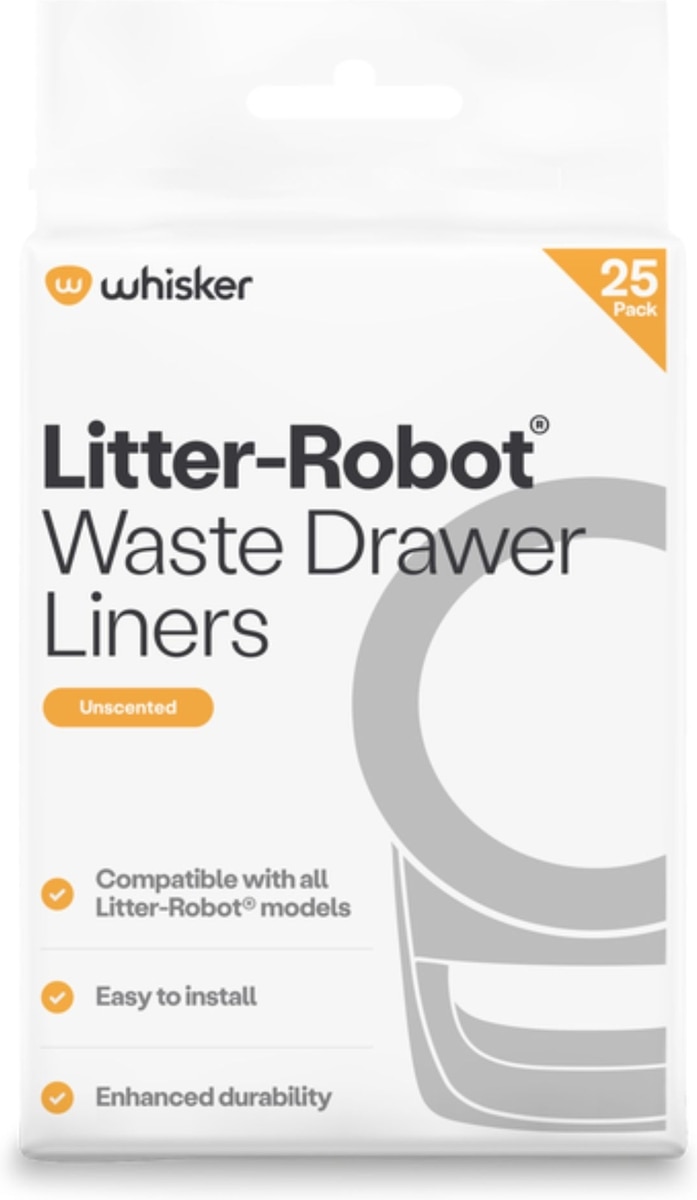
Whisker Litter-Robot Custom Fit
from
$21.99
Custom-molded liners built specifically for the Litter-Robot waste drawer with a drawstring for touch-free disposal.
Pros
- + Precisely shaped to fit the waste drawer with no bunching
- + Opaque white color improves waste-level sensor accuracy
- + Drawstring lets you remove waste without touching it
Cons
- – Only fits Litter-Robot branded units, not universal
- – Flat-pack liners can be fiddly to unfold and seat cleanly

PETKIT PuraMax Trash Bag Rolls
from
$29.99
Pre-separated drawstring roll bags engineered to the exact waste-bin dimensions of PETKIT's automatic litter boxes.
Pros
- + Individually pre-separated bags speed up changes
- + Tear-resistant material handles clumped waste without leaking
- + Drawstring makes lifting and sealing the bin one motion
Cons
- – Not compatible with PETKIT's Purobot Ultra model
- – Only works with PETKIT's own waste bin size
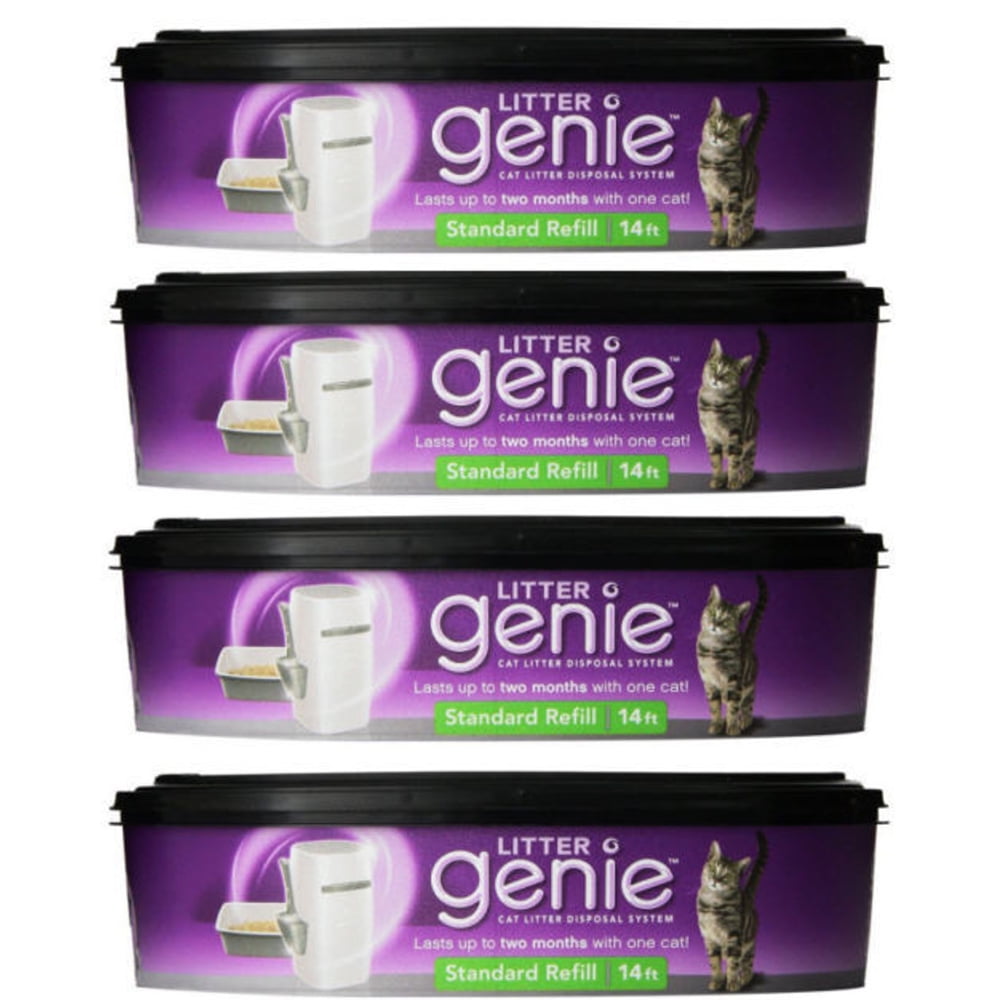
Litter Genie Standard Cartridge
from
$23.28
A continuous multi-layer film cartridge you cut and tie to size, sealing odors inside the Litter Genie pail system.
Pros
- + Seven-layer film offers strong odor sealing
- + Adjustable cut-to-length reduces wasted bag material
- + One cartridge lasts weeks even for a single cat
Cons
- – Requires manually cutting and tying off each bag
- – Some users report the film occasionally splitting

PetSafe ScoopFree Crystal Tray
from
$34.95
A fully disposable, pre-filled crystal litter tray with built-in leak-proof lining designed to be tossed and replaced whole.
Pros
- + Entire tray lifts out and gets discarded, no scooping or bagging needed
- + Crystal litter controls odor faster than clumping clay
- + Low-tracking crystals keep floors cleaner
Cons
- – Only works with PetSafe ScoopFree hardware
- – Ongoing tray cost adds up compared to reusable liner systems
The verdict
Our top picks at a glance
Litter-Robot 3, 4, and EVO owners who want the most accurate waste-level sensor readings
PuraX, PuraMax, and PuraMax 2 owners wanting a snug factory-fit liner
Manual litter box owners using a Litter Genie pail who want long-lasting, adjustable-length bagging
ScoopFree owners who want a completely hands-off tray swap with no scooping or bag-tying at all
At a glance
How they compare
| Spec | Top pickWhisker Litter-Robot Custom Fit | PETKIT PuraMax Trash Bag Rolls | Litter Genie Standard Cartridge |
|---|---|---|---|
| Price | $21.99 | $29.99 | $23.28 |
| Closure | Built-in drawstring | Integrated drawstring | — |
| Material | LLDPE/MDPE blend with pigmented masterbatch | Tear-resistant HDPE | — |
| Pack size | 25 liners | 5 rolls (100 bags total) | 4 cartridges |
| Compatibility | All Litter-Robot models (3, 4, 5, EVO) | PuraX, PuraMax, PuraMax 2 | Litter Genie Style, Design, Essential, Standard, Plus, XL+ pails |
| Check price → | Check price → | Check price → |
Top 3 of 4 shown — full shortlist above.
If you own a self-cleaning litter box, the waste bag matters almost as much as the machine itself. A liner that doesn’t match your unit’s bin dimensions will bunch, gap, or tear, and that’s when odor escapes and waste-level sensors start giving false readings. My pick for most owners is the Litter-Robot Waste Drawer Liners by Whisker, because they’re molded to fit the exact drawer shape and their opaque color keeps the sensor reading accurately. But the right bag depends entirely on which machine you own, so I’ve broken down the four best options by hardware compatibility below.
One thing worth clarifying up front: these are disposal bags, not litter box liners. That distinction matters more than most buying guides admit.
Liners vs. waste bags: why this distinction matters
A litter box liner sits inside the box, under the litter, and is meant to make scooping easier. A waste bag (or waste drawer liner, in automatic-box terms) holds already-scooped waste for disposal. Cat Behavior Associates and Cats.com both flag traditional under-litter liners as a common source of behavior problems: cats’ claws snag on the plastic while digging, the liner tears, urine seeps underneath, and the whole thing ends up smellier than no liner at all. Some cats develop an outright aversion to the box because the scratching sound or the sensation of a claw catching in plastic is unpleasant enough to make them look elsewhere.
None of the four products in this guide are that kind of liner. They’re all waste-bin bags built for automatic litter boxes, which is a fundamentally different job: they need to be tear-resistant, correctly sized to a specific bin, and easy to seal one-handed. That’s a solvable problem, unlike the under-litter liner, which experts largely agree isn’t worth the trouble regardless of brand.
Litter-Robot Waste Drawer Liners by Whisker — best for Litter-Robot 3, 4, and EVO
These are molded specifically to the Litter-Robot waste drawer, not a generic bag stretched to fit. That precision matters more than it sounds: an ill-fitting bag wrinkles and leaves pockets where waste settles unevenly, and on a Litter-Robot that throws off the waste-level sensor, triggering false “drawer full” alerts or letting the drawer actually overflow before the machine notices. The opaque white pigmented film improves sensor accuracy for the same reason, giving it a consistent surface to read against.
Each liner has a built-in drawstring, so once the drawer’s full you cinch it shut and lift it out without touching the contents. They’re rated for 9 to 11 gallons and made from an LLDPE/MDPE blend, a tougher combination than a basic kitchen bag, which matters given how much clumped, saturated litter a multi-cat household can generate in a week.
- Precisely shaped to the drawer, these liners avoid bunching or gaps.
- The opaque color keeps the waste-level sensor reading correctly.
- They only fit Litter-Robot branded units (3, 4, 5, EVO), nothing else.
- The flat-pack folding can be a little fiddly to open and seat cleanly the first few times.
If you own any generation of Litter-Robot, this is the low-friction default. Trying to save money with a generic trash bag here usually costs you a jammed drawer or a bad sensor read later.
PETKIT PuraMax & PuraMax 2 Trash Bag Refill — best for PuraX, PuraMax, and PuraMax 2 owners
PETKIT’s own bags are pre-separated on a roll rather than flat-packed, so you tear off one, drop it in, and you’re done — no unfolding or hunting for the opening. Each roll holds 20 bags, five rolls per pack, for 100 bags total, which is a decent supply for a single-cat household stretching several months between restocks.
The material is a tear-resistant HDPE, which Automatic Litter Box Pro and similar coverage of automatic-box maintenance flag as the real point of failure for cheap universal bags: sharp clumped litter edges puncture thin film, and once that happens odor and moisture leak straight through. PETKIT built the drawstring into the bag opening itself, so lifting and cinching the bin is one motion instead of a bag-then-tie-then-lift sequence.
- Pre-separated bags make changes faster than a flat-pack roll.
- Tear-resistant HDPE holds up against clumped, sharp-edged waste.
- These don’t fit PETKIT’s own Purobot Ultra, so check your exact model.
- They’re sized only for PETKIT’s bin, not a universal fit.
Good pick if you’re already in the PETKIT ecosystem and want the closest thing to a factory-matched bag without paying premium prices.
Litter Genie Standard Refill Cartridge — best for manual boxes paired with a Litter Genie pail
This one works differently from the other three. Instead of pre-cut bags, you get a continuous roll of 7-layer odor-barrier film inside a cartridge, and you pull, cut, and tie off however much length you actually need. That adjustability is the whole appeal if you’re scooping a single cat’s box daily: you’re not wasting a full pre-sized bag on a small scoop, and one cartridge is rated to last up to two months for one cat.
The 7-layer film is built for odor sealing specifically, which lines up with how the Litter Genie pail system is designed to work as a sealed unit rather than a simple bag-in-bin setup. At 14 feet of film per cartridge and four cartridges per pack, this is the best value option here if you’re not running an automatic box at all.
- Seven-layer film gives strong odor sealing between changes.
- Cut-to-length design means less wasted material per scoop.
- You have to manually cut and tie each bag, more hands-on than a pre-formed liner.
- Some owners report the film occasionally splitting under pressure.
This is the pick if you don’t own an automatic litter box, or if you want a pail system as a companion to one for interim scoops.
PetSafe ScoopFree Crystal Litter Disposable Refill Tray — best for hands-off tray swaps
This is the outlier in the group because it isn’t a bag at all — it’s a complete disposable tray, pre-filled with blue non-clumping crystal litter, that you lift out whole and replace. There’s no scooping, no bagging, no tying. When the tray’s done (rated up to 30 days for one cat), you discard the entire thing and drop in a fresh one.
Crystal litter also controls odor faster than clumping clay in most owner and expert comparisons, largely because it dries waste rather than clumping around moisture, and it tracks less on floors. The built-in plastic tray lining handles leak protection on its own, so there’s no separate liner to manage.
- The entire tray lifts and discards with zero scooping or bag-tying.
- Crystal litter controls odor faster and tracks less than clay.
- This only works with PetSafe ScoopFree hardware.
- The ongoing per-tray cost adds up compared to a reusable liner-and-litter system over time.
If convenience is your only priority and you already own a ScoopFree, this is about as hands-off as litter disposal gets. If you’re cost-sensitive over the long run, a liner-based system paired with your own litter will usually work out cheaper.
How to choose the right bag for your box
Start with hardware compatibility, not price. Every product above is built to one specific bin geometry, and a bag that doesn’t match your unit’s dimensions is the single most common cause of the wrinkling, gapping, and pocket-trapped urine that Perfect Litter Box and Cats.com both call out as the main failure mode for generic liners.
After compatibility, weigh these:
- Household size: Multi-cat homes generate waste fast; a bag or tray rated for “one cat” duration will need swapping much sooner with two or three cats using the same box.
- How hands-off you want disposal to be: A drawstring bag still requires you to lift and tie. A disposable tray system like ScoopFree removes even that step but costs more per use.
- Material toughness: Standard grocery bags are a false economy for scooped litter, per Americat Company’s testing, since sharp clumped edges and moisture cause them to fail. Look for HDPE, LLDPE/MDPE blends, or multi-layer films, not generic thin plastic.
- Odor control expectations: A bag alone doesn’t neutralize odor; it just contains it. If ammonia smell is your main complaint, that’s more a litter problem than a bag problem, and activated-charcoal litters have been shown to cut ammonia significantly more than standard clumping litter, per veterinary odor-control research summarized by DVM360.
How often should you clean a litter robot 4?
Whisker recommends emptying the Litter-Robot 4 waste drawer roughly every 7 days for one cat, though multi-cat households often need to empty it every 3 to 5 days depending on litter volume and drawer capacity. The unit’s waste-level sensor will alert you before it overflows, but checking manually a bit ahead of that alert keeps odor from building up in the sealed drawer.
How often should you clean a cat litter box?
Scoop a traditional litter box at least once a day, and do a full litter change and box wash every 1 to 2 weeks depending on how many cats use it. Automatic boxes handle the daily scooping mechanically, but the waste bin or drawer still needs emptying on the schedule above, and the litter itself typically needs full replacement every few weeks even in a self-cleaning system.
How do you clean a litter box properly?
Dump all the litter, wash the box with unscented dish soap and warm water (avoid harsh chemicals or bleach, which cats can find off-putting), dry it completely, and refill with fresh litter. For automatic boxes, wipe down the globe or platform and check the waste bin seal or sensor area, since residue buildup there is a common cause of persistent odor even after a bag change.
What litter should you use with a Litter-Robot?
Whisker recommends clumping clay litter for the Litter-Robot, since the sifting mechanism relies on clumps forming firmly enough to sift through the globe without breaking apart. Crystal, pellet, or non-clumping litters generally aren’t recommended because they don’t sift the same way and can cause the machine’s cycle to underperform or leave loose litter mixed into waste.
Can you flush cat litter?
No. The EPA advises against flushing cat litter of any kind, including bags marketed as flushable or biodegradable, because cat feces can carry Toxoplasma gondii, a parasite that most wastewater treatment systems aren’t designed to remove, posing a risk to aquatic life downstream. Bag it and put it in household trash instead, even with compostable or plant-based bags.
The bottom line
Match the bag to the machine first. The Litter-Robot liners and PETKIT refills exist because generic bags don’t fit those drawers well enough to keep odor sealed in or sensors reading correctly, and that precision fit is worth paying for if you already own the hardware. If you’re running a manual box, the Litter Genie cartridge’s cut-to-length film is the more economical, lower-waste option. And if pure convenience matters more than long-term cost, the ScoopFree disposable tray removes scooping and bagging entirely, at a higher ongoing price per use.
Keep reading
- Meowant self-cleaning cat litter box
- Litter robot 4 self cleaning cat litter box
- Automatic litter box
- Cumrige self cleaning litter box
- Baxton Studio Elie 2-Door Cat review
- Self cleaning litter box for large cats
- Merry Products Cat Litter Loo review
- Baxton Studio Elie 2-Door Cat vs Merry Products Cat Litter Loo
Sources
- Are Litter Box Liners a Good Idea? - Cat Behavior Associates
- Best Litter Box Bags and Liners (Tested and Reviewed) - Cats.com
- Do You Need Litter Box Liners? (Pros and Cons) - Perfect Litter Box
- Why You Should Stop Using Litter Box Liners - Whiskerful Life
- Litter Box Liners: Good or Bad? TheCatSite Forum
- Cat Litter Bags - Made in USA - Americat Company
- I Tried To Find a Sustainable Litter Bag and It Broke Me - Heatmap News
- Eco-Friendly Cat Waste Management - Petmate
- Cat Litter Disposal: Environmental Impact - MyCatJournal
- What Pet Waste Costs - Earth911
- Best Cat Litter for Long-Lasting Odor Control - Emily Pets
- Latest Scoop on Litter: Odor Control Research - DVM360
FAQ
Frequently asked questions
- How do you get rid of cat pee smell in a litter box area?
- Wash the box itself with unscented soap and warm water rather than ammonia-based cleaners, which can mimic the smell of urine and attract cats back to the same spot. For lingering odor in carpet or flooring nearby, enzymatic cleaners break down the uric acid crystals that cause the smell, and veterinary research on odor-control sprays has found they can improve litter box acceptance even when their effect on the smell itself is modest.
- Are cat litter box liners bad for cats?
- Traditional under-litter liners are widely flagged by cat behaviorists as a common cause of litter box avoidance, since claws catch in the plastic while digging and the scratching sound can be aversive to cats. This is a separate issue from the waste disposal bags covered in this guide, which sit in the waste bin rather than under the litter and don't create the same digging-related problem.
- Do biodegradable litter bags actually break down?
- Only under specific industrial composting conditions, typically requiring sustained heat above 145°F, which most home compost setups can't reach. Many "plant-based" biodegradable bags also blend cornstarch or sugarcane with PBAT, a fossil-fuel-derived plastic, for durability, so they aren't purely plant material even when marketed that way.
- How many bags do I need per month for an automatic litter box?
- For a single cat, expect to change the waste bag roughly once a week, so about four to five bags a month; multi-cat households often need one every three to five days, closer to eight to ten bags monthly. Check your specific machine's waste-level sensor or bin capacity, since fill rate varies by litter type and how many cats share the box.